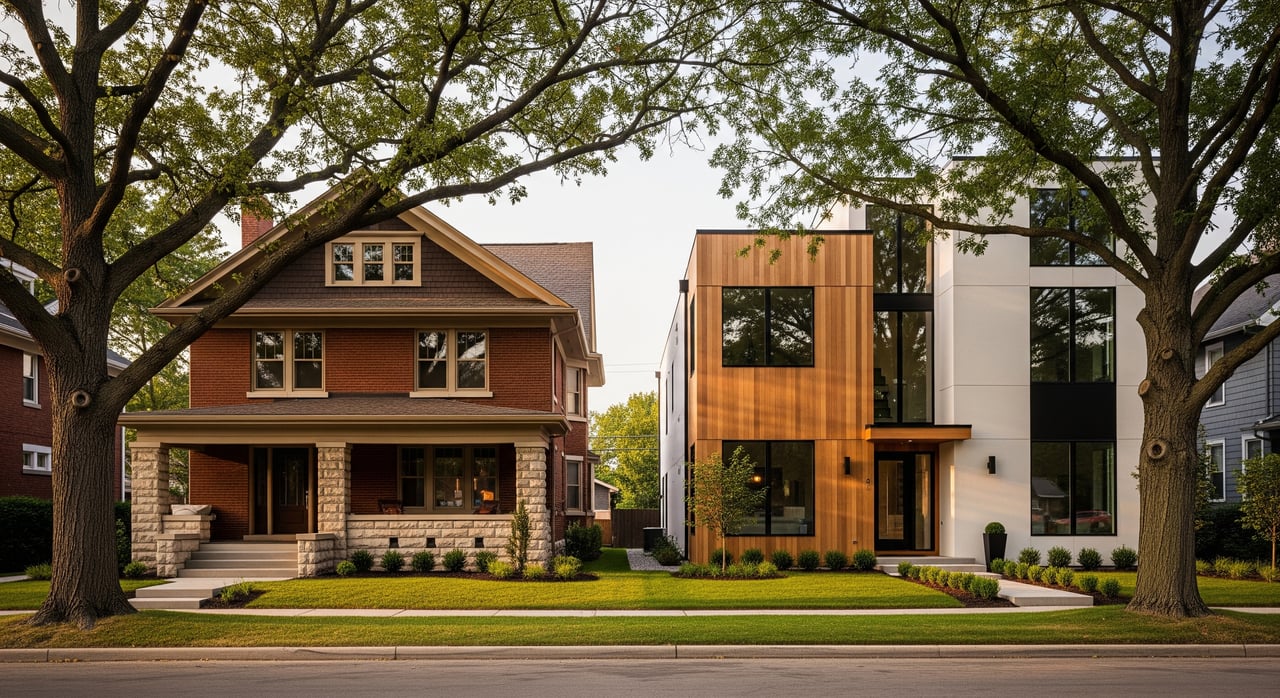
Torn between the character of an established Bourbonnais home and the convenience of a new build? You want a smart investment that balances daily comfort with long-term value. In this guide, you’ll compare physical features, ongoing costs, maintenance risks, and resale factors through a local lens. You’ll also get a simple decision framework and touring checklist to make your choice easier. Let’s dive in.
Bourbonnais market basics
Bourbonnais sits in Kankakee County, a small-town market south of the Chicago metro area. Many buyers weigh proximity to local employers with drive times to regional job centers and access to intercity rail from nearby Kankakee. Since commutes rely on state highways and interstates, build your search around real-world routes and timing. Check current conditions and road updates through the Illinois Department of Transportation as you plan.
Like many Midwestern suburbs, Bourbonnais has an older core and later suburban expansions. Established neighborhoods offer varied architecture and larger, tree-lined lots. Newer subdivisions bring open layouts, modern systems, and lower immediate maintenance. Climate also matters. Northern Illinois winters and warm summers affect insulation, roof life, and heating costs. Basements are common, so you should evaluate waterproofing and drainage, and confirm flood risk even if a property is not near a waterway.
Established vs new: quick compare
| Category | Established homes | New builds |
|---|---|---|
| Style & layout | Mid-century ranches, bungalows, colonials, split-levels with more variety and sometimes smaller kitchens or closets | Contemporary ranches and two-stories with open-concept plans and standardized options |
| Lot & trees | Often larger, irregular lots with mature shade and privacy | More uniform lot sizes, younger landscaping, cul-de-sac layouts |
| Location & walkability | Frequently closer to village services, parks, and schools | Often on the edge of town, may include trails or small amenities |
| Systems & efficiency | Condition varies. Older HVAC, windows, and insulation may increase utility costs unless updated | Built to current codes with modern HVAC, insulation, and windows. Energy-efficient options common |
| Maintenance risk | Higher near-term risk for roof, siding, windows, plumbing, electrical | Lower near-term repairs. Landscaping maturation and warranty timelines matter |
| HOA & rules | Less likely to have an HOA | More likely to have an HOA with rules and monthly or annual fees |
Costs and budgeting
Purchase price depends on condition and location. New builds often carry a premium per square foot for new materials, builder profit, and upgrades. Established homes can offer more square footage for the same budget, but updates and deferred maintenance will affect total cost.
Plan for the full monthly picture. Property taxes are based on assessed value, so both older and newer homes follow the same local rates. Assessed values can differ by property and new construction assessments can change as a subdivision develops. Always confirm the current tax bill through the county assessor before you write an offer.
HOA fees are more common in newer subdivisions and can cover common-area maintenance, landscaping, sidewalks, or amenities. Review rules, fees, and any pending special assessments. Utility costs often run lower in new builds because of modern insulation and high-efficiency systems. Older homes may have higher heating or cooling costs until you upgrade.
For ongoing upkeep, use a rule of thumb. Annual maintenance typically ranges from 1 to 3 percent of the home’s value. If you buy an older property, set aside a renovation or emergency reserve of about 5 to 10 percent of your purchase price to handle near-term updates.
Systems and efficiency
New construction meets current local building codes, which usually means better insulation, modern electrical panels, and more efficient heating and cooling. Many builders offer energy-efficient packages. Ask for equipment model numbers and insulation details so you can compare real performance.
Established homes vary widely. Some owners have replaced roofs, furnaces, windows, and electrical panels. Others may still have older systems that work but cost more to operate. Look closely at the age and service history of the furnace or boiler, water heater type, window condition, and attic insulation depth.
Most new builds include builder warranties. A common structure is one year for general workmanship and longer coverage for major structural elements. Always verify what is covered, what is excluded, and how claims are handled. Save copies of all warranty documents and ask about any required maintenance to keep coverage valid.
Inspections and local risks
Northern Illinois homes benefit from thorough inspections. For both established homes and new builds, prioritize the following checks:
- Structural and envelope: foundation cracks or settlement, roof age and condition, siding, window seals, and attic insulation.
- Mechanicals: furnace or boiler age and service records, water heater type and age, HVAC ducting, and electrical panel capacity.
- Plumbing: older cast-iron or galvanized pipes versus modern copper or PEX lines.
- Basements and grading: signs of moisture, sump pump operation, downspout extensions, and grading that slopes away from the foundation.
- Environmental considerations: ask about possible asbestos-containing materials and lead-based paint in pre-1978 homes, especially if you plan to renovate.
- Sewer or septic: confirm public sewer connection or get septic inspection and pumping records.
Flood risk is property-specific in Kankakee County. Review your lot’s flood zone and nearby drainage features using the FEMA Flood Map Service Center. Even outside a special flood hazard area, a high water table or poor grading can create basement moisture. Many newer subdivisions incorporate storm retention ponds to meet modern stormwater rules, which can help manage runoff, but you should still review lot elevation and drainage paths.
Financing and incentives
New construction sometimes comes with builder incentives like closing cost credits, upgrade packages, or preferred lender benefits. Compare any incentive to the total price and long-term costs. For established homes that need work, explore renovation-friendly options such as FHA 203(k) or Fannie Mae HomeStyle. These programs can roll qualified improvements into your mortgage, which can help you modernize while keeping cash on hand for other expenses.
For timing, match financing to your move. If you need to move quickly, existing homes may fit better than a long build timeline. If your schedule is flexible, a new build can let you choose finishes and floor plan details.
Resale and long-term value
Established homes in mature neighborhoods can hold value well when they sit on larger lots and offer proximity to everyday amenities. However, outdated layouts or visible deferred maintenance can lower resale appeal. Newer homes attract buyers who want modern layouts and lower immediate maintenance. Resale performance depends on builder reputation, neighborhood demand, and how well the home is maintained over time.
Think about how long you plan to stay. A shorter horizon may favor turnkey properties, while a longer stay gives you more time to realize the benefits of updates made to an established home.
Decision framework you can use
Use this checklist to narrow your options:
- Must-haves: bedrooms and bathrooms, preferred commute time, school boundary, garage or parking, single-level living if needed.
- Trade-offs: yard size versus proximity to shops and parks, modern open layout versus original character, low maintenance versus lower purchase price.
- Budget: purchase cap, HOA fee tolerance, and renovation reserve for older homes.
- Timeline: need to move soon or able to wait for construction and closing.
Score each contender on a 0 to 10 scale and weight what matters most for you:
- Location and commute convenience
- Condition and turnkey status
- Lot and outdoor space
- Price and value compared to similar sales
- Maintenance and upkeep comfort level
For commuting, consider actual drive routes and any seasonal changes or road work. The U.S. Census American Community Survey offers helpful regional context on commute patterns, and IDOT can inform you about road corridors and construction that may affect travel times.
Touring checklist for buyers
Bring this quick-reference list when you tour Bourbonnais homes:
- Exterior: roof age and material, siding condition, gutters and downspouts, grading away from the foundation.
- Basement: dryness, sump pump and battery backup, signs of past water intrusion.
- Systems: furnace or boiler age, water heater age and type, electrical panel capacity and breakers.
- Windows and doors: condition, drafts, and seal failure.
- Kitchen and baths: plumbing condition, ventilation, and any evidence of leaks.
- Attic: insulation depth and ventilation.
- Lot and privacy: yard size, tree condition, and sun exposure.
- HOA and rules: fees, what they cover, and any planned assessments.
- Taxes and bills: recent tax bill and average utility costs from the seller.
- Flood and drainage: confirm flood zone status through the FEMA Flood Map Service Center and note any nearby retention areas.
Work with a local expert
When you are choosing between an established home and a new build, small details make a big difference. You want recent comparable sales by age and style, reliable contractor estimates, and clear insight into HOA rules, tax bills, and builder warranties. That is where local guidance pays off.
If you are ready to compare options, walk lots, or vet builders in Bourbonnais and Kankakee County, connect with Annie Mitchell. As a design-forward, locally expert agent backed by Berkshire Hathaway HomeServices Speckman Realty, Annie provides full buyer representation, new-construction support, and staging advice that helps you see both the potential and the pitfalls. Schedule a Free Consultation to move forward with clarity and confidence.
FAQs
Will a new build cut utility costs in Bourbonnais?
- New construction typically has better insulation, modern HVAC, and efficient windows, which can lower utility costs compared to many older homes that have not been upgraded.
How much should I budget for repairs on an older home?
- A common guide is 1 to 3 percent of home value per year for maintenance, plus a 5 to 10 percent reserve of your purchase price for near-term updates.
Are there areas with larger lots or historic character in Bourbonnais?
- Established neighborhoods often feature larger, irregular lots with mature trees and varied architecture, while newer subdivisions tend to have more uniform lot sizes.
How important is a builder warranty on a new home?
- It matters because it can reduce out-of-pocket costs in the early years; review what is covered, what is excluded, coverage length, and how claims are handled.
How do property taxes compare for new versus older homes?
- Both follow the same local tax rates, but assessed values differ by property; always review the most recent tax bill and ask about any exemptions before making an offer.
If I buy an older home, what upgrades should I prioritize?
- Focus on roof, HVAC, windows, insulation, electrical panel, and any moisture or drainage fixes that protect the structure and improve comfort first.