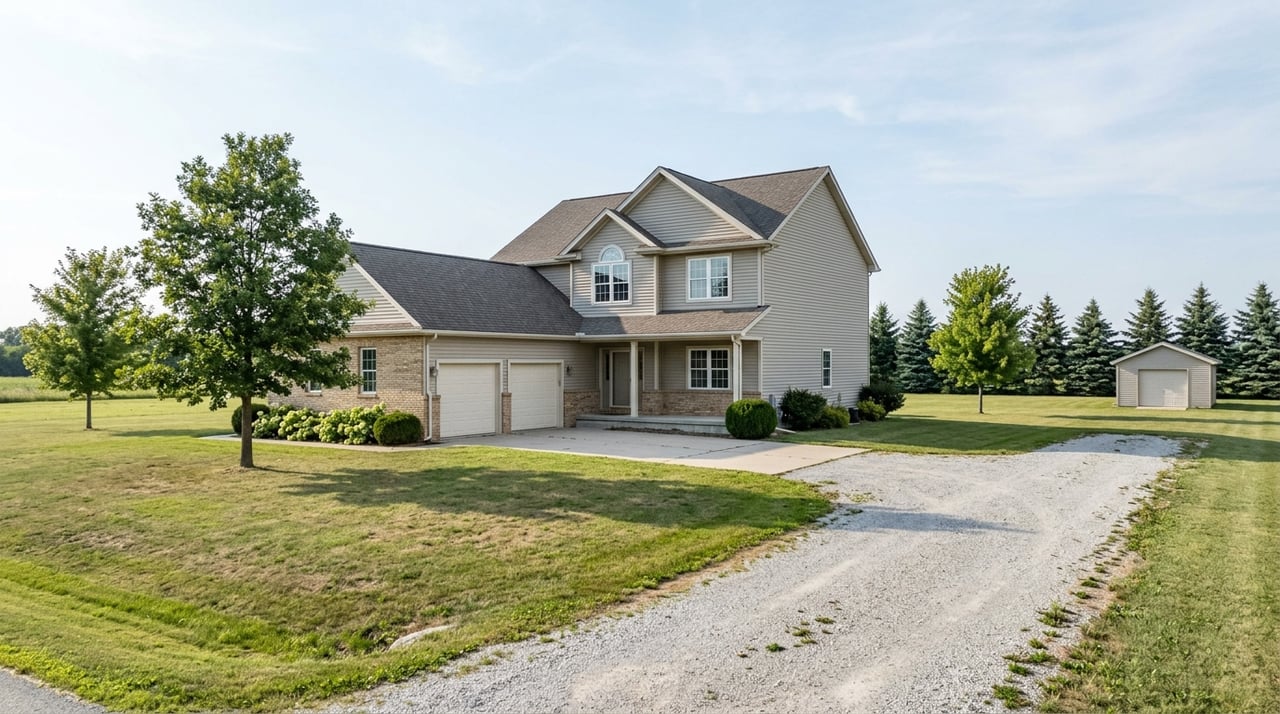
Dreaming about a quiet place where you can spread out, build at your own pace, and enjoy more space around you? Buying land in St. Anne for a country retreat can be a smart move, but only if you verify what the parcel can actually support before you close. From zoning and access to wells, septic, and drainage, the details matter here more than the acreage number on the listing. Let’s dive in.
Why St. Anne appeals to land buyers
St. Anne sits in the southeast corner of Kankakee County, and that setting gives you a very different land-buying experience than a dense suburban market. If you want open space, room for a custom home, or a future retreat property, the area naturally attracts that kind of search.
What makes St. Anne especially important for acreage buyers is that land decisions here are highly parcel-specific. Kankakee County offers planning and GIS tools for zoning, floodplains, wetlands, drainage districts, and topography, which tells you right away that one parcel may work very differently from the next.
That is why buying land here is less about finding a pretty piece of ground and more about confirming whether your long-term plan fits the site. If you want a peaceful retreat, the first step is making sure the land can legally and practically support it.
Confirm village or county rules first
Before you evaluate anything else, find out whether the parcel is inside St. Anne village limits or in the unincorporated countryside. That single detail affects who regulates zoning and land-use questions.
Kankakee County says it administers and enforces land-use ordinances in unincorporated areas. The county FAQ also notes that it only administers zoning for certain municipalities, and St. Anne is not listed among them, so you should not assume county zoning rules apply if the land is inside the village.
This can change your next steps in a big way. A parcel with a St. Anne mailing address may still fall under different local oversight depending on its exact location.
Start with zoning and use rights
Zoning is the first real filter for any country retreat purchase. If the parcel is in unincorporated Kankakee County, common rural districts include agriculture, agricultural-estate, and rural-estate zoning.
The county lists principal setbacks for these districts, and they can affect where you place a home, outbuildings, or other improvements. In A-1 agriculture, setbacks are 50 feet in front, 30 feet on the side, and 100 feet in the rear. In A-2 agricultural estate and RE rural estate, the county lists 50 feet in front, 20 feet on the side, and 50 feet in the rear.
Those numbers may sound technical, but they shape how usable the land really is. A deep setback or narrow buildable area can limit your home placement, future barn, detached garage, or outdoor living plan.
Do not rely on a map screenshot
Online maps are useful, but they are not the final word. Kankakee County states that its online zoning ordinance and maps are for reference only, and that the printed version with later amendments is the official ordinance.
That means you should verify the parcel with the Planning Department’s current official materials before you make decisions. A quick web map review is a good starting point, but it is not enough for a purchase as important as land.
This is one area where local guidance matters. When you are planning a retreat property, small zoning details can have a very large impact on what you can build and how you can use the land.
Review special rules for rural property
Rural land often comes with extra use rules beyond the main home. If you are thinking about a workshop, shed, pole building, or animal shelter, those details should be part of your review early on.
Kankakee County says accessory structures in unincorporated areas must be at least 10 feet from the principal structure and 5 feet from an interior lot line. If horses are part of your vision, the county requires at least 2 acres, a minimum width of 200 feet, and no more than one horse per acre. The county also sets shelter-building setbacks of 100 feet from a street right-of-way and 50 feet from interior side or rear lot lines.
Even if you are only buying for a simple weekend retreat today, it is wise to think ahead. Future plans often evolve, and the right parcel should give you room to grow into them.
Understand permit and application costs
Sometimes the land you love is close to workable, but not quite there under current rules. In that case, you may need a rezoning, special use permit, variance, or farmstead exemption.
Kankakee County lists current base fees of $600 for rezonings and special use permits, $280 for variances, and $100 for farmstead exemptions, plus a plat of survey. The county also says an EcoCAT results report is required with rezoning, special use permit, and many variance filings so it can review potential effects on protected natural resources.
These costs and steps do not automatically make a parcel a bad choice. They simply mean you should factor timing, paperwork, and budget into your land-buying decision.
Check access before you fall in love
A country retreat should feel easy to reach, not complicated from day one. That is why legal and practical access deserves just as much attention as the homesite itself.
Kankakee County’s zoning FAQ states that one driveway is allowed per 330 feet of highway frontage. It also says no driveway may be within 100 feet of another access point, driveways must be at least 250 feet from an intersecting highway, and the entrance flare must be at least 10 feet from the property line.
Those rules can affect whether your preferred driveway location is even possible. If the parcel needs an entrance permit, culvert, or right-of-way improvements, the county development handbook says the appropriate road authority reviews those items.
Think about emergency access too
When you picture a quiet retreat, it is easy to focus on views and privacy. It is just as important to think about road condition, visibility, and how emergency services would reach the property.
The Saint Anne Fire Protection District says it serves St. Anne and surrounding communities with one station and 30 volunteer firefighters. For rural acreage, that makes good access planning especially important.
This does not mean rural land is a problem. It simply means a smart buyer evaluates approach roads, turn-in points, and year-round access early in the process.
Study drainage, floodplain, and topography
Beautiful open land can still come with hidden site challenges. Water movement, drainage patterns, floodplain limits, and elevation changes all affect how and where you build.
Kankakee County’s stormwater ordinance regulates drainage installations, floodplain activities, erosion control, and site runoff. The county says this program is intended to prevent increased flood hazards, protect wetlands, and keep contaminated runoff out of drainage systems.
The county also provides GIS and map resources for floodplains, wetlands, drainage districts, zoning, and topography. For land buyers, those tools are essential because they help you spot issues before they become expensive surprises.
Look beyond the homesite
A retreat property is more than the spot where the house might sit. You also need to understand how the rest of the land functions across seasons and weather conditions.
The Kankakee County Soil and Water Conservation District lists resources for well water, drainage districts, soil testing, and tiling services. If you are considering a hobby farm setup, a garden, trails, or open recreation space, this bigger picture matters.
In short, usable land is not just about acreage. It is about how the parcel handles water, supports access, and fits your intended use over time.
Verify water and utility service
Utility questions should always be answered parcel by parcel. Do not assume service availability just because the address says St. Anne.
If the parcel is inside the village, St. Anne’s water information says the village owns water service lines from the water main to the meter well or curb stop. The village also states that its water mains are lead-free, though some homes may still have lead or lead-component service lines, and Illinois requires water systems to maintain a cross-connection control program.
If you are buying vacant land, the key point is simple: confirm what is available, what is already installed, and what would still need to be added. That step can change both your timeline and your budget.
Plan for wells and septic in rural areas
For many rural parcels outside public utility service, private well and septic planning is part of the process. This is one of the most important practical steps for a future retreat build.
The Kankakee County Health Department issues private well permits and inspects new wells. It also performs well and septic evaluations at existing properties, often during a sale or refinancing, and says these evaluations are frequently requested by a lender or buyer.
According to the health department, the evaluation process can include a records search, on-site septic inspection, dye test, and, if requested, water sampling for coliform bacteria and nitrates. The department also notes that an evaluation is a snapshot in time rather than a guarantee of future performance.
Understand build-out steps early
If your retreat plan includes new construction, it helps to map the process before closing. Waiting until after purchase can create delays you did not expect.
The county development handbook says addresses in unincorporated areas are issued by the ETSB 911 Department. It also notes that building permits may be required for work in the unincorporated county, and that land development or property division can move through several county agencies before final County Board action.
The Illinois Department of Public Health also states that abandoned wells must be properly sealed within 30 days after abandonment because they can become pathways for groundwater contamination. That is another reason to ask careful questions about any existing site improvements on the parcel.
A smart way to evaluate St. Anne land
If you are comparing parcels for a country retreat, a simple checklist can keep you focused on what matters most:
- Confirm whether the parcel is inside St. Anne or unincorporated county land
- Verify current official zoning, not just an online map
- Review setbacks and allowed uses for your intended plan
- Check whether special permits or variances may be needed
- Confirm road access, driveway rules, and any entrance permit requirements
- Review floodplain, wetlands, drainage, and topography maps
- Verify utility availability or plan for private well and septic
- Ask about surveys, existing improvements, and address or permit steps for a future build
A country retreat should bring peace of mind, not preventable surprises. The more clearly you understand the parcel before you buy, the better your chances of choosing land that truly fits your vision.
If you are exploring land in St. Anne or anywhere in Kankakee County, having local guidance can make the process much clearer. Annie Mitchell can help you evaluate lots, land, and new-construction opportunities with a practical, local approach.
FAQs
What should you verify first when buying land in St. Anne?
- Start by confirming whether the parcel is inside St. Anne village limits or in unincorporated Kankakee County, because that affects which land-use rules may apply.
What zoning issues matter for a St. Anne country retreat?
- You should verify the official zoning district, setbacks, and any special use rules that could affect your home placement, outbuildings, or future plans.
What access rules apply to rural land near St. Anne?
- In unincorporated county areas, driveway placement rules can depend on frontage, distance from intersections, distance from other access points, and property line clearance.
What site conditions should you check before buying acreage in St. Anne?
- Review floodplain, wetlands, drainage district, and topographic information so you understand where and how the land may be suitable for building.
What water and septic questions matter for St. Anne land buyers?
- You should confirm whether public water is available or whether the property will need a private well and septic system, then review permit and evaluation requirements with the appropriate local departments.
Can Annie Mitchell help with land and lot purchases in Kankakee County?
- Yes. Annie Mitchell works with buyers on land, lot, and new-construction opportunities across Kankakee County and surrounding communities.