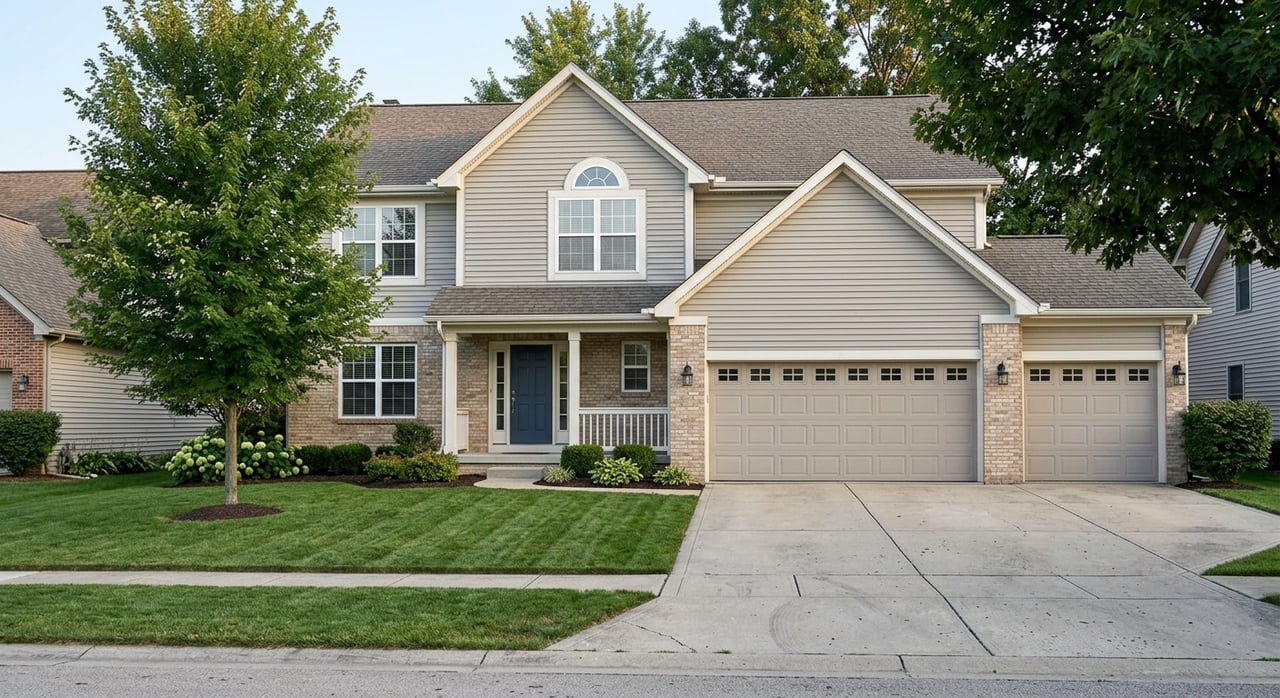
Looking for more house without losing the practical feel that made suburban living appealing in the first place? Monee can be a smart option if you want more space, a more established ownership market, and a setting that still feels connected to regional job centers. This guide will help you understand how Monee’s different neighborhood patterns fit different move-up goals, what to compare as you tour homes, and how to narrow in on the right pocket for your next move. Let’s dive in.
Why Monee stands out
Monee is a small Will County village with 5,139 residents, 2,119 households, and a 93.0% owner-occupied housing rate. The median owner-occupied home value is $240,500, and the mean travel time to work is 33.9 minutes. That combination points to a community shaped by homeowners and commuters rather than a one-size-fits-all suburban product.
For move-up buyers, that matters. You are not just comparing bedroom counts or garage space here. You are also weighing commute patterns, how close a home sits to future commercial growth, and whether you want a traditional subdivision feel, a lower-maintenance setup, or a more open edge-of-town setting.
How to think about Monee neighborhoods
Monee is best understood by housing pattern, age, and setting instead of by a long list of heavily branded neighborhoods. Local history shows that the housing stock grew outward from the original village core, with postwar development like Monee Manor in 1947 and additional neighborhood platting on former agricultural land after the 1990s.
In simple terms, most move-up buyers in Monee are choosing among five broad options:
- Older village blocks and historic residential pockets
- Established subdivisions such as Country Meadows and McCorkle
- Newer subdivision areas such as Eagle Fair Estates
- Attached, maintenance-light ownership at Monee Country Oaks
- Semi-rural edge properties on or near former agricultural land
That framework makes home shopping easier. It helps you compare lifestyle fit, lot size, upkeep, and future surroundings instead of getting stuck on square footage alone.
Older village pockets
If you like a more traditional village setting, older residential pockets may feel appealing. These areas tend to reflect Monee’s earlier growth pattern, with homes tied more closely to the original village layout and postwar expansion.
For a move-up buyer, this option can offer character, a more established streetscape, and close-in access to village amenities. The tradeoff is that home styles, lot layouts, and updates may vary more from property to property than in a newer subdivision, so careful touring and inspections matter.
Best fit for older village areas
These pockets may suit you if you want:
- A more established setting
- A less uniform streetscape
- Potential value in older housing stock
- Access to parks or village services nearby
Because these areas can differ block by block, it is especially helpful to verify utilities, lot boundaries, and any nearby zoning transitions before you move forward.
Established subdivisions
For many move-up buyers, established subdivisions offer the most familiar middle ground. The village has referenced Country Meadows Subdivision and McCorkle subdivision in roadway and maintenance notices, which signals that these are recognized residential pockets with their own street and infrastructure history.
These areas can appeal to buyers who want a conventional suburban feel without jumping fully into newer construction. You may find a balance of predictable neighborhood layout, detached homes, and a more settled environment, while still being in a village that has room to grow.
Why established subdivisions work well
If you are moving up from a starter home, established subdivisions can make sense because they often offer:
- More living space than entry-level housing
- A recognizable neighborhood layout
- Mature street patterns and infrastructure
- A practical suburban feel with fewer unknowns than fringe development
That said, “established” does not mean identical. Roadway, drainage, and utility work can affect ownership experience, so it is smart to ask how maintenance has been handled in the subdivision and whether any improvements are planned.
Newer subdivision pockets
If you want a more recent neighborhood design, Eagle Fair Estates is the clearest local example of newer subdivision stock. County records note that development there began in 2006 in the southeastern part of the village.
For move-up buyers, newer subdivisions often stand out for their more current streetscape and more recent building systems. If your priority is a home that feels newer in layout and planning, this type of pocket may rise to the top of your list.
What to compare in newer areas
A newer home is not just about aesthetics. As you compare newer subdivision options, pay attention to:
- Lot size versus interior size
- Street layout and traffic flow
- Distance to parks and everyday routes
- Adjacent zoning and nearby undeveloped land
Monee continues to promote industrial and commercial growth, and its planning documents point to a long-term growth story. That makes it important to look beyond the home itself and understand what surrounding land may support over time.
Low-maintenance ownership options
Not every move-up buyer wants a larger lawn or more exterior chores. If you want more comfortable space but less hands-on upkeep, Monee Country Oaks offers the clearest maintenance-light ownership option in the local market.
This is a 90-unit community of attached townhome-style condominiums built in the mid to late 1990s. The community describes open-concept living and dining areas, dine-in kitchens, spacious primary suites, attached two-car garages, and tree-lined boulevards.
Who should consider attached living
This option may work well if you want:
- More room than a starter home or smaller rental
- Attached ownership with a more structured exterior-maintenance model
- A two-car garage and functional layout
- Less day-to-day exterior responsibility
If you tour an attached or condo-style property, ask detailed questions about what the association covers, how assessments work, what reserves exist, and which exterior items remain your responsibility.
Semi-rural edge settings
Some move-up buyers want a different kind of upgrade. Instead of focusing only on interior square footage, they want more breathing room, larger lots, and a less dense setting. In Monee, that often means looking at homes on the village edge where development extended onto former agricultural land.
These properties can feel especially appealing if you value open space and a quieter setting. Nearby natural assets strengthen that appeal, including Raccoon Grove Nature Preserve in Monee Township and Monee Reservoir, which protects a 46-acre lake within a 248-acre preserve.
Why edge properties appeal
Semi-rural edge homes may fit you if your wish list includes:
- More lot space
- Lower-density surroundings
- Easy access to outdoor recreation
- A setting that feels less tied to a traditional subdivision pattern
This category also requires more property-specific homework. Utility setup, drainage, and maintenance responsibilities can differ by parcel, so it is wise to verify details during the showing and inspection process.
Parks, recreation, and daily livability
Move-up buyers often think beyond the house itself, and Monee gives you several lifestyle assets to weigh. The village lists Firemen's Park, Friendship Park, Sunrise Park, and Potawatomi Park, all with basic play and picnic amenities. Firemen's Park also includes a covered pavilion for rentals.
Monee Reservoir is one of the area’s strongest outdoor amenities. It includes natural-surface trails, fishing, boating, canoeing or kayaking, and picnicking. If you prefer open-air recreation over dense retail concentration, that can be a meaningful part of your decision.
At the same time, village planning points to future change. The comprehensive plan calls for compact, walkable neighborhoods, a trail network, a new Town Center, and limiting freight traffic through neighborhoods. The village also identifies a Town Center area between Monee-Manhattan Road, Egyptian Trail, and Governors Highway with 47 acres of retail space, which signals continued civic and commercial investment.
What move-up buyers should verify
Monee has a lot going for it, but it is not a place where you should assume every street functions the same way. The village’s zoning map includes residential, multiple-family, public land, commercial, and industrial districts, so one of the most important steps is understanding the exact context around each home.
Use this checklist as you tour properties:
- Is the home in the village core, an established subdivision, a newer subdivision pocket, or an edge setting?
- What zoning applies to the parcel and nearby land?
- Are water and sewer municipal at this address, and are there any parcel-specific questions to confirm?
- How are street maintenance, drainage, and subdivision improvements handled?
- If it is attached housing, what does the association cover?
- How close is the home to parks, the reservoir, major roads, or likely freight routes?
- What school assignment applies to this specific address?
On schools, Monee Elementary School and Crete-Monee High School are in Crete-Monee CUSD 201U, but attendance boundaries can vary by address. It is always worth verifying school assignment for the exact property you are considering.
The big takeaway for buyers
Monee works best when you shop by fit, not by assumptions. This village offers a mostly owner-occupied market, a commuter-friendly location about 35 miles south of Chicago’s Loop on I-57, and a range of housing choices that can support different versions of a move-up purchase.
If you want a more traditional feel, older village areas and established subdivisions may be your best match. If you want newer planning, Eagle Fair Estates and similar pockets may stand out. If lower upkeep matters most, attached ownership can be a smart compromise. And if space is the real luxury for you, edge properties deserve a close look.
The right move-up decision in Monee comes from matching your daily routine, maintenance comfort, and long-term goals to the part of the village that fits you best. If you want help comparing homes and neighborhood pockets in Monee, connect with Annie Mitchell for a local, thoughtful approach to your next move.
FAQs
What kind of neighborhood options are available in Monee for move-up buyers?
- Monee is best understood as a mix of older village pockets, established subdivisions, newer subdivision areas, attached condo-style housing, and semi-rural edge properties.
Which Monee subdivision is a good example of newer housing?
- Eagle Fair Estates is the clearest local example in the research, with development beginning in 2006.
Are there low-maintenance ownership options in Monee?
- Yes. Monee Country Oaks is a 90-unit attached townhome-style condominium community that offers a lower-maintenance ownership model.
What should buyers verify before buying a home in Monee?
- You should confirm zoning, nearby land uses, water and sewer setup, drainage and street maintenance responsibilities, association rules if applicable, and school assignment by exact address.
Does Monee offer parks and outdoor recreation for homeowners?
- Yes. Monee has several local parks, and Monee Reservoir adds trails, fishing, boating, paddling, and picnic space for outdoor recreation.
Is Monee a commuter-oriented market for suburban buyers?
- Yes. Census data shows a mean travel time to work of 33.9 minutes, and the village is located about 35 miles south of Chicago’s Loop on I-57.